Leading Boldly Through Change With Katarina Berg

Photo: Katarina Berg | BOLD Moves at The Roundhouse.
In workplaces shaped by constant transformation, leaders face a defining choice: react to change, or create it.
For Katarina Berg, Chief Human Resources Officer at On and former CHRO of Spotify, leadership is about daring to design the future rather than defending the past. Throughout her decade-plus at Spotify, she helped guide the business from explosive startup to a global powerhouse, overseeing people, workplace strategy, brand, and creative, proving that culture can be a company’s strongest competitive advantage.
Now at On, one of the fastest-growing sportswear brands in the world, Katarina is stepping into a new chapter of people-centric transformation. In a conversation with Patrick McCullough, President of Hallmark Business Connections, she shared how she is approaching this next era: with curiosity, clarity, and the belief that today’s leaders must be bold enough to challenge the status quo.
Her book, Bold, builds on these principles, describing a new era in HR where culture is intentional, recognition is relational, and strategy is deeply human.
Watch the full conversation with Katarina below, or read on for the highlights.
Guided by Culture, Energized by Change

When Katarina Berg joined Spotify in 2013, the company was rapidly evolving from a disruptive music streaming startup into a global powerhouse. Over the next decade, she helped guide that transformation as Chief Human Resources Officer, a role that stretched far beyond traditional HR. She led global workplace services, strategy operations, and even brand and creative, establishing the infrastructure and identity needed to support a tenfold increase in workforce size.
During her tenure, Katarina championed several groundbreaking people initiatives, including Spotify’s global parental leave policy (#LeadOnLeave) and its flexible Work-From-Anywhere model — programs that have since influenced employer practices across the tech industry. She believed HR should not operate on the fringes of the business but function as a strategic engine powering performance. As she shared in TIME, “My team and I have been very aware of not just trying to be close to the business, but be the business.”
Through these years of growth, one insight rose above all others: culture is the strategy. Technology can scale and product can innovate, but it’s the lived employee experience — autonomy, purpose, belonging — that determines whether momentum is sustained.
When Katarina began exploring her next chapter after more than a decade at Spotify, she focused on finding a place where culture was treated with the same conviction. In conversations with the founders of On, she felt an immediate sense of alignment. A belief that people don’t just contribute to progress, but shape it.
“There is something to all of us, I think, that gets us going, and I think that is culture.”
As she steps into her new role, she is choosing to lead with listening, understanding what already makes the organization strong before defining where it should evolve. For leaders guiding transformation, this distinction matters: change is most effective when it’s built with people, not around them.
Clarity as a Cultural Anchor

As organizations scale, culture becomes harder to hold steady. What once felt instinctive in a close-knit startup can quickly feel ambiguous when new people, new priorities, and new layers of complexity enter the picture. Katarina has seen that shift firsthand — and she believes leaders must guide it with intention, not assumption.
For her, the first building block is clarity. Employees need to understand not only what the company values, but what those values look like in action — which behaviors are expected, recognized, and rewarded. Without that connection, culture risks becoming something aspirational rather than operational.
McKinsey research supports this approach: organizations that communicate their expectations clearly and consistently are significantly faster in decision-making and execution, especially in moments of disruption. Clarity reduces friction. It eliminates guesswork. And it gives people the confidence to move boldly rather than cautiously.
When leaders reinforce that alignment in how they communicate, evaluate, and celebrate success, culture becomes a shared language — one that travels across functions, locations, and roles. It strengthens accountability, accelerates performance, and creates a more direct line of sight between individual contributions and organizational outcomes.
Adaptability is Essential

Clarity builds stability, but growth requires evolution. Even the strongest cultures can become fragile when they refuse to change. Katarina has seen organizations hold tightly to what made them successful early on — only to watch those same habits create friction once the business moves forward.
That’s why culture must remain rooted in core principles yet remain open to new realities. As companies expand into new markets, hire new talent, and shift strategies, culture has to stretch with them. The question leaders must continually ask is not “Is this who we were?” but “Is this who we need to be now?”
This idea sits at the center of Katarina’s leadership philosophy and her book, Bold. In a world defined by volatility and rapid change, she argues that leaders must move beyond managing for control or certainty. Instead, they must lead with curiosity, humility, and courage — even when the path ahead is unsure. Boldness and vulnerability aren’t contradictions. Together, they make organizations more resilient.
Katarina emphasizes that there is no single “right” culture. Only one that is right for the current moment. When culture stays fixed while everything around it changes, employees feel the disconnect first: that tension between how decisions used to be made and how they need to be made now.
To navigate that transition effectively, transparency and trust are non-negotiable. People may not agree with every change, but they should always understand why it is happening. When employees trust the organization’s direction, speed accelerates. And as Katarina notes, speed is a currency no company can afford to lose.
A culture that evolves with intention signals to employees: You still belong here. Your growth has a place in our growth.
That belief is what keeps teams energized through transition and keeps organizations ready for whatever comes next.
Recognition That Drives Performance

In high-autonomy environments, recognition becomes a mechanism for alignment. When people move fast and take ownership of decisions, they need clear signals that their work is seen, valued, and making a real difference. Without that reinforcement, even strong performers can feel disconnected from the impact they’re creating.
For Katarina, the most effective recognition always reflects what the organization stands for. Perks and celebrations shouldn’t feel random. They should tie back to shared principles and clearly communicate which behaviors deserve to be celebrated. When recognition is grounded in purpose and fairness, it strengthens clarity and commitment.
She has experienced its power firsthand. When a CEO once reached out to personally acknowledge her hard work, not for a milestone, but for the consistent effort she put in behind the scenes, it reshaped how she viewed her own leadership. The note made her feel capable, trusted, and genuinely valued. And that feeling influenced how she showed up for others. As she put it: “Proud people perform harder.”
The data backs this up. Employees who strongly agree their manager holds them accountable are 2.5 times more likely to be engaged in their work. And those who feel adequately recognized are half as likely to say they’ll leave in the next year.
And it doesn’t need to be elaborate. One simple, research-backed approach is “reflective recognition,” where leaders invite employees to share what they’re proud of or what challenges they’ve overcome recently. A question like, “What’s something you worked on this week that you feel really good about?” surfaces meaningful contributions that often remain invisible. Reflecting those achievements back, “Thank you for navigating that setback; your persistence made the outcome possible,” helps people see their own progress, which is an intrinsic motivator.
This is where small, intentional gestures can make a lasting impact. A handwritten note. A personalized message. A moment of appreciation delivered at the right time. At Hallmark Business Connections, we see every day how thoughtful recognition strengthens confidence, deepens relationships, and reminds people that the work they do truly matters.
Belonging That’s Built, Not Assumed
As organizations grow quickly, belonging can become one of the hardest parts of culture to sustain. What once felt like a tight-knit team can evolve into multiple communities that don’t always share the same reference points. Katarina has seen this shift across continents and time zones. And she knows belonging doesn’t happen simply because leaders hope it will.
Diversity may bring people in the door, and inclusion may help them feel valued, but belonging is what convinces them they are exactly where they’re meant to be. It requires consistent signals that every person contributes to something bigger than themselves.
For Katarina, this comes down to paying attention to how culture shows up in everyday behavior. Who gets invited into conversations? Whose efforts are spotlighted? Whose voices shape decisions? These micro-moments of inclusion are what define whether people feel like part of the team or simply near one.
The ultimate goal is a culture where people instinctively support one another because they’re committed to the same mission — and invested in each other’s success. Fostering true belonging requires leaders to be intentional about the behaviors they reward, the access they create, and the way they welcome new people into the fold. It means ensuring employees feel like “one of us,” no matter how long they’ve been there or where they sit in the organization.
During the conversation, Patrick shared a favorite lesson from former HBC President, Tressa Angell:

It’s a reminder that personal ambition only carries an organization so far. To truly thrive, people must care just as much about how the team performs, learns, and moves forward together. Everyone should feel the joy of a win, and the weight of a setback, because they’re playing the same game with the same goals.
For Katarina, that is the power of “we”: a culture where shared ownership drives progress and belonging becomes something people actively build for one another every day.
Top Tips From the Hallmark Team
Here are a few simple ways leaders can reinforce inclusion and trust in the everyday flow of work:
Be specific and personal. Go beyond a generic thank-you. Name the contribution you’re recognizing and the impact it had. When people understand why they matter, confidence grows.
Recognize what often goes unseen. Call attention to effort and teamwork, not just big milestones. Acknowledging the process, not the outcome, shows that reliability and care are valued.
Use varied touchpoints. Different people prefer different forms of recognition. Handwritten cards, public praise for accomplishments, private one-on-one conversations, or small tokens of gratitude each create connection in their own meaningful way.
Make recognition part of the rhythm. Build a cadence for appreciation. During onboarding, after project wrap-ups, at team meetings, or simply at the end of a long week. Consistency turns gestures into culture.
Why this works: A personalized note or message becomes a meaningful interruption in a busy day -- a signal that someone paused long enough to notice. Those moments create trust, which is the foundation of every healthy, high-performing culture.
Quick action for leaders: At the end of each week, ask yourself: Who contributed quietly? Who took a risk? Who showed resilience? Who could use a reminder that they belong? Then take one small action to show them they are seen.
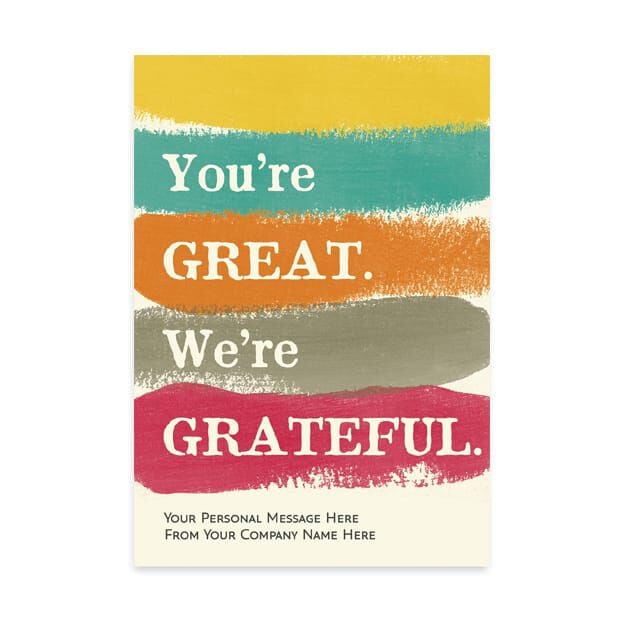
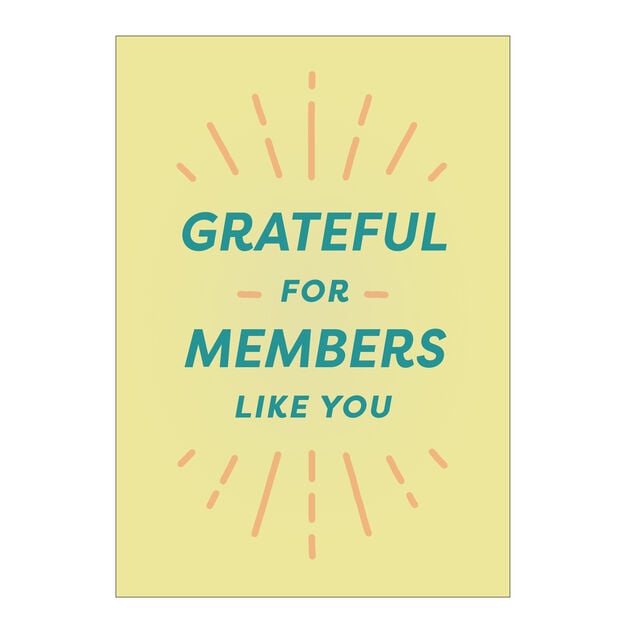
Below are a few favorite picks that help make recognition feel tangible, personal, and lasting.

The Courage to Be Value-Driven
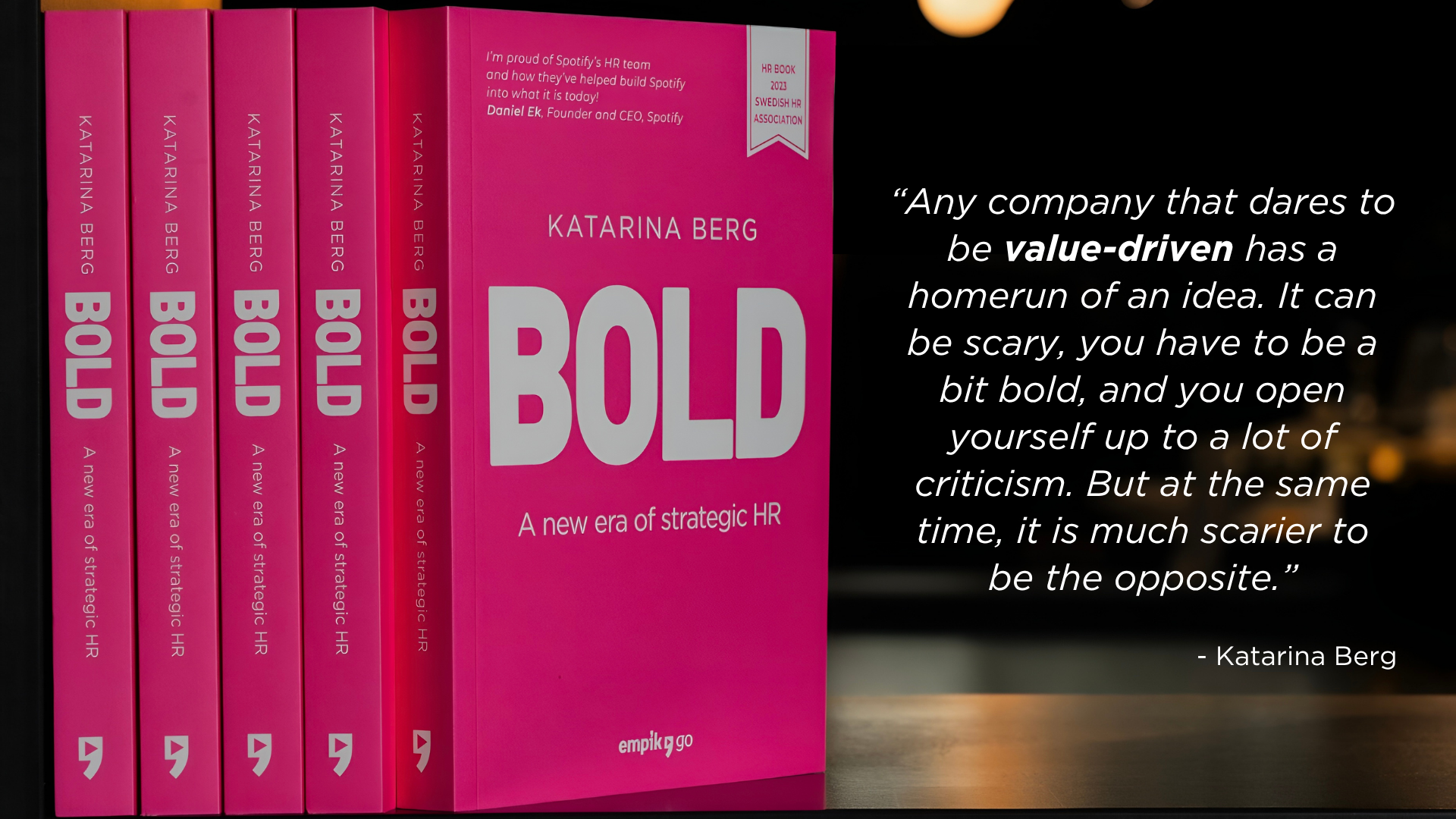
Katarina believes the most successful organizations will be the ones that put their values to work. Not the values that sit framed on a wall or buried in a mission statement, but the ones reflected in real decisions, in everyday interactions, and in how people are recognized and supported.
She learned this early in her Spotify journey. As the only woman on the executive team — and one of the few focused on behavioral science in a product-centric environment — she found herself pushing against long-accepted norms. Her team challenged how communication worked, how leaders showed up, and how culture should evolve. It wasn’t always welcomed.
There were moments, she admits, when she and her team wondered if the effort was worth it. But with boldness, consistency, and the trust of founders who believed in a more human-first future, change took hold. People began to understand HR not as a satellite function, but as a critical driver of progress.
That experience shaped a conviction she carries into every chapter that follows:
“Any company that dares to be value-driven has a homerun of an idea. It can be scary, you have to be a bit bold, and you open yourself up to a lot of criticism. But at the same time, it is much scarier to be the opposite.”
For Katarina, daring to be value-driven means choosing transparency even when decisions are unpopular. It means calling out the behaviors that erode trust, and celebrating the ones that strengthen it. It means ensuring every employee, whether they’re leading a launch or operating behind the scenes, understands the power of the collective ‘we.’
It requires courage, humility, and a steady commitment to doing what’s right for people and the business.
That philosophy anchors Bold, Katarina’s book on what it takes to lead in environments defined by complexity and constant change. In it, she encourages leaders to move beyond the myth of perfect certainty and instead embrace curiosity, emotional intelligence, and decisive action — even when the path ahead isn’t clear. And with all royalties benefiting Min Stora Dag, a foundation that creates meaningful, joy-filled experiences for children facing serious illness, the impact of the book reaches far beyond the workplace.
At Hallmark Business Connections, we see her belief in values come to life through the small moments that shape a workplace. A birthday that doesn’t go unnoticed. A heartfelt congratulations on a career milestone. A message of support during a difficult time. When recognition happens regularly and with sincerity, it becomes an integral part of how an organization operates.
We help large and small businesses make that possible at scale. Whether it’s automated mailings for birthdays or work anniversaries, personalized cards celebrating promotions and team wins, or supportive messages for life events, our solutions ensure recognition never gets lost in the urgency of the day. And with services like mail-on-your-behalf and custom integrations, we make it easy for leaders to deliver care in a way that feels uniquely human.

About Katarina Berg:
Katarina Berg is a seasoned HR leader with a passion for transforming organizations and cultivating thriving workplace cultures. In 2025, she will be stepping into the role of Chief Human Resources Officer at On, where she will be driving people-centric strategies to support the company’s continued growth and innovation.
Previously, Katarina spent over a decade at Spotify, heading up the global HR team since 2013. During her time there, she also led Global Workplace Services, Strategy Operations, and Brand & Creative teams, playing a pivotal role in Spotify’s evolution from a fast-growing startup to a mature international powerhouse.
Her career journey includes senior HR roles at renowned multinational companies such as Preem, Swedbank, Kanal 5 (SBS Broadcasting), and 3 (Hi3G Access). A true advocate for building inclusive, dynamic environments, Katarina is dedicated to reinventing processes and nurturing teams where creative and passionate people can do their best work, have fun, and grow their careers. Outside of work, Katarina is the author of Bold, where she shares her insights on leadership, transformation, and daring to challenge the status quo.
When she’s not driving organizational change, you’ll likely find her exploring new cuisines, cooking for friends and family, or enjoying the serenity of the archipelago. She still dreams of her adventurous days traveling the world whitewater rafting.
These insights are part of our Conversations on Connection series, leadership conversations that explore how care, gratitude, and authenticity drive stronger relationships. Follow along for more perspectives and practical ways to build relationships that last.
Conversations on Connection – The Heart of the Hustle with Chief Heart Officer Claude Silver
In this Article
-
Guided by Culture, Energized by Change
-
Clarity as a Cultural Anchor
-
Adaptability is Essential
-
Recognition That Drives Performance
-
Belonging That’s Built, Not Assumed
-
Top Tips From the Hallmark Team
-
The Courage to Be Value-Driven
Products

Similar Articles


The Heart of the Hustle with Claude Silver
Nov 04, 2025